


Website speed is no longer technical. It’s strategic.
In today’s digital landscape, website speed is one of the most critical factors behind brand growth.
A slow website doesn’t just create friction.
It reduces visibility, impacts brand perception, and directly affects conversions.
More than 50% of users abandon a website if it takes longer than 3 seconds to load.
For industries like hospitality and real estate, where every visit can translate into a booking or a sale, this means lost revenue.
In the luxury space, time is the most valuable asset your clients have.
A slow website is the digital equivalent of making a guest wait in the lobby for 20 minutes.
The good news: most performance issues are predictable, and fixable with the right strategy.
What’s slowing down your website
Below are the most common factors affecting performance, and how to optimize them.
1. Unoptimized images
Large image files are one of the main causes of slow websites.
For visually driven brands, hotels, real estate, lifestyle, this is especially critical.
How to improve it:
- use modern formats like WebP
- compress images before uploading
- implement lazy loading
adjust sizes based on device
Impact:
Image optimization alone can reduce file size by up to 70%, significantly improving load time.
2. Too many plugins or integrations
Websites built on platforms like WordPress often accumulate plugins over time.
Each one adds scripts, requests, and additional load.
How to fix it:
- remove unused plugins
- avoid duplicate tools
- simplify your tech stack
Insight:
Simpler systems tend to perform better.
3. Render-blocking scripts
Some JavaScript files prevent content from loading until they are fully processed.
How to optimize:
- defer non-essential scripts
- remove unused JavaScript
- minify files
- load scripts only when needed
SEO impact:
Improves key metrics like Largest Contentful Paint (LCP), an important ranking factor for Google.
4. Low-quality hosting
Your hosting provider directly affects performance.
Even a well-designed site can become slow if the infrastructure is outdated or overloaded.
How to improve it:
- upgrade to performance-optimized hosting
- use SSD or NVMe servers
- implement a CDN
Impact:
A better hosting environment can improve speed by 40% or more.
5. No caching strategy
Without caching, your website rebuilds every page on each visit.
How to fix it:
- enable page caching
- activate browser caching
- optimize static resources
Result:
Faster load times, especially for returning users.
6. Unoptimized code
Poorly structured HTML, CSS, and JavaScript can slow down your site.
How to improve it:
- minify CSS and JavaScript
- remove unused code
- simplify architecture
Result:
Better performance and long-term scalability.
7. Poor mobile experience
More than 60% of global web traffic comes from mobile devices.
Today, speed is not defined on desktop, it’s defined on an iPhone while your customer is at an airport or in transit.
That’s where bookings are won, or lost.
How to optimize:
- responsive design
- lightweight resources
- reduced scripts on mobile
- optimized typography
The metrics that actually matter
Brands that invest in performance see measurable results:
- up to +30% increase in conversion rates
- 20–40% growth in organic traffic with optimized SEO
- significant reduction in bounce rate
In hospitality, speed directly impacts direct bookings and revenue performance.
Speed impacts more than performance
Website optimization is not just technical.
It directly influences:
- search rankings
- brand perception
- user experience
- lead generation
- conversions
In competitive industries, performance becomes a strategic advantage.
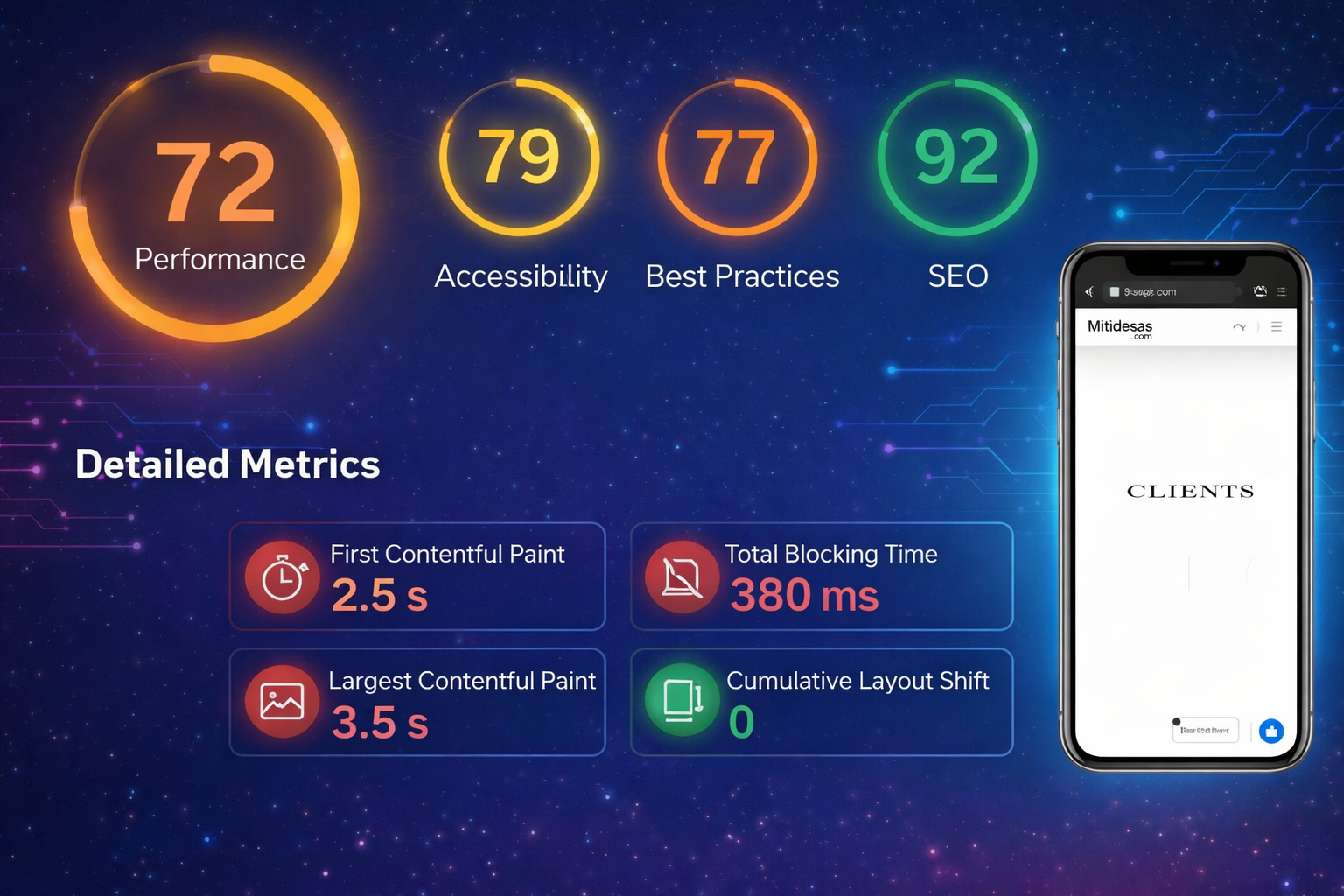
Proven results across luxury brands
By implementing these strategies, we’ve helped leading brands across Mexico and the U.S including projects connected to Four Seasons Hotels and Resorts, The Ritz-Carlton Hotel Company, Solmar Hotels & Resorts, Grupo Habita, and Fairmont Hotels & Resorts. enhance their digital performance, increase visibility, and strengthen direct channels.
Final thoughts
If your website feels slow, it’s not just a technical issue. It’s untapped growth potential.
Speed doesn’t just improve performance.
It transforms how users experience, perceive, and convert with your brand.
Elevating digital performance
At Mktideas Agency, we design digital platforms where strategy, design, and performance work as one.
We build websites that are not only visually compelling, but engineered to deliver results.
We offer a complimentary digital performance audit for selected brands in hospitality, real estate, and lifestyle.
Discover here the true potential of your website, and how to turn it into a high-performing digital platform.


 mktideasagency